Building an Efficient WSP Management Framework for Wealth Management Firms
In the rapidly evolving financial services landscape,compliance is essential for maintaining operational integrity. Wealthmanagement firms face constant scrutiny from regulatory bodies such as the SEC,FINRA, and State Boards. To stay ahead, firms must ensure their WrittenSupervisory Procedures (WSPs) meet current standards and adapt to shiftingrules and enforcement trends. A robust WSP management framework is no longeroptional—it’s critical for mitigating compliance risks, safeguarding clienttrust, and optimizing operational efficiency.
The challenge of static WSPs
Traditional approaches to WSP management, which often relyon static templates and manual processes, fall short in today's dynamicregulatory environment. These limitations create significant compliance andoperational challenges, including:
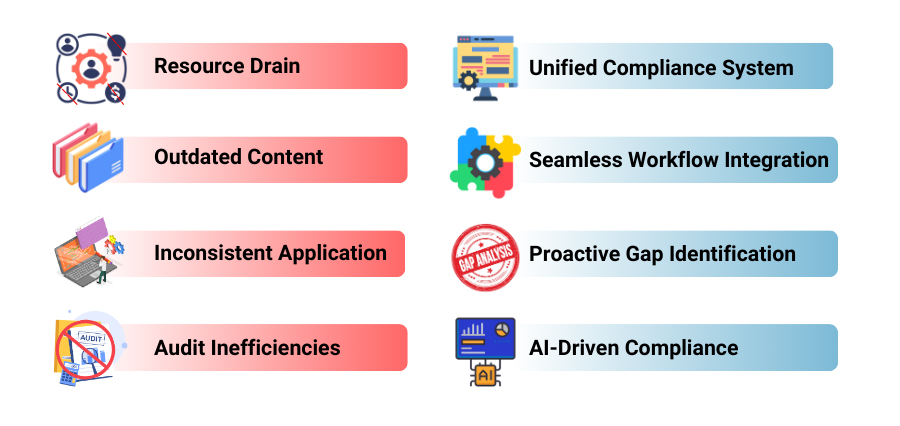
Outdated Content: More than 40% of firms report gaps in regulatory compliance due to outdated policies (Source: Thomson Reuters Compliance Survey).
Lack of Customization: Generic templates fail to address the specific operational nuances of individual firms, leaving critical gaps.
Resource Drain: Compliance teams spend an average of 30% of their time on manual policy management (Source: Gartner).
Inconsistent Application: Disparate procedures increase the risk of compliance failures across departments.
Audit Inefficiencies: Firms using static frameworks take 35% longer to complete audits, increasing the likelihood of errors and penalties (Source: FINRA).
Reactive Risk Management: Traditional systems fail to provide proactive insights into emerging regulatory changes.
These challenges highlight the urgent need for a modern,adaptive, and technology-driven approach to WSP management.
A Proactive and Dynamic WSP Management Framework
To overcome the limitations of traditional WSP management,wealth management firms need a proactive, technology-enabled solution. Atailored approach that integrates advanced tools, such as SurgeONE, the AICompliance Assistant, can streamline compliance and ensure scalability.
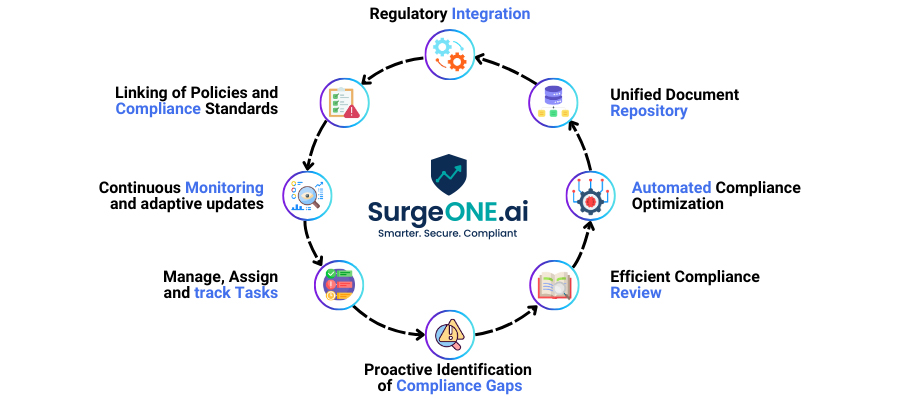
Unified Regulatory Integration: A central system consolidates compliance requirements from multiple regulatory bodies (SEC, FINRA, and State Boards). This eliminates fragmented approaches, providing firms with a comprehensive view of their obligations.
Stat: 68% of firms with centralized compliance systems report fewer audit findings (Source: Deloitte).
Dynamic Linking of Policies and Compliance Standards: Directly aligning regulations with organizational policies ensures seamless integration into operational workflows. This clarity minimizes errors and improves accountability.
Continuous Monitoring and Adaptive Updates: Automated tools track real-time regulatory changes and provide proactive alerts and updates. Firms that use real-time monitoring experience a 28% reduction in compliance issues.
Proactive Identification of Compliance Gaps: Automated assessments identify WSP weaknesses, enabling prompt corrective actions that reduce the risk of regulatory penalties.
Streamlined Oversight and Review Processes: SurgeONE enhances oversight by offering detailed logs of updates and actions, facilitating transparent, accurate reviews, whether by internal teams or external experts.
AI-Driven Compliance Enhancement: SurgeONE acts as a co-pilot for compliance teams, offering up-to-the-minute insights, automating policy adjustments, and simplifying audit procedures. This intelligent framework improves decision-making while reducing errors often associated with traditional systems.
Conclusion
By adopting a proactive and dynamic WSP management frameworkpowered by technology, wealth management firms can mitigate compliance risks,stay ahead of regulatory changes, and build a robust, agile WSP system thatenhances operational efficiency. With tools like SurgeONE, firms can simplifycompliance complexities, ensure regulatory alignment, and foster a culture ofcontinuous improvement.
Author:
SurgeONE Team
The regulatory record for financial services. One platform unifying compliance, cybersecurity, data, and AI governance for regulated financial firms.
Never miss the latest compliance news
1300 El Camino Real, Suite 100, Menlo Park, CA 94025 · +1 650-294-8889 · info@surgeone.ai