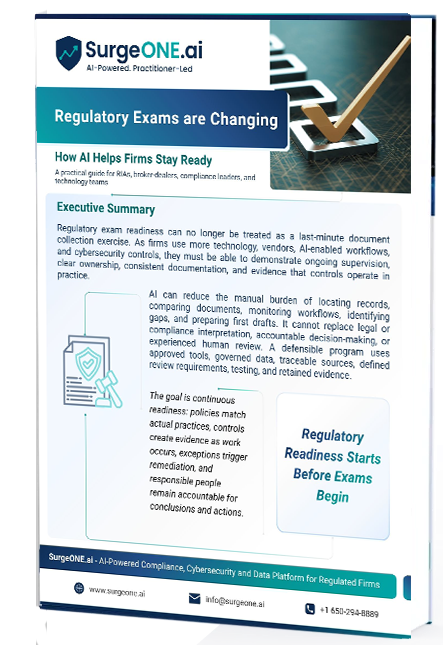
Regulatory exam readiness should be continuous, not a last-minute exercise. Firms need clear ownership, documented processes, effective controls, and evidence that those controls actually work.
AI can help by automating record searches, document comparisons, workflow monitoring, gap identification, and draft preparation—but human judgment and accountability remain essential.
A strong readiness program ensures that policies reflect actual practices, controls generate evidence, exceptions are remediated, data and sources are governed, and responsible people review and approve conclusions.
Regulatory exam readiness can no longer be treated as a last-minute document collection exercise. As firms use more technology, vendors, AI-enabled workflows, and cybersecurity controls, they must be able to demonstrate ongoing supervision, clear ownership, consistent documentation, and evidence that controls operate in practice.
AI can reduce the manual burden of locating records, comparing documents, monitoring workflows, identifying gaps, and preparing first drafts. It cannot replace legal or compliance interpretation, accountable decision-making, or experienced human review. A defensible program uses approved tools, governed data, traceable sources, defined review requirements, testing, and retained evidence.
The goal is continuous readiness: policies match actual practices, controls create evidence as work occurs, exceptions trigger remediation, and responsible people remain accountable for conclusions and actions.

The regulatory record for financial services. One platform unifying compliance, cybersecurity, data, and AI governance for regulated financial firms.
![SurgeONE SOC 2 [Type II] report, AICPA](https://cdn.prod.website-files.com/67f63b13deda8292f01f2b7a/680b67fb8c5b79c60a4f7d6d_SOC_CPA_Blue-txt.webp)

